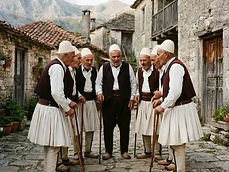
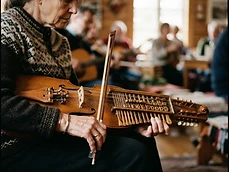
Singing to the accompaniment of the lahuta
The lahuta is a single-stringed bowed instrument used to accompany the singing of epic poetry and historical narratives. This tradition is a vital component of oral history and cultural expression in the Albanian-speaking regions of the Balkans.

Explanation
The performance involves a singer, known as a lahutar, who recites long epic poems while playing the instrument. The music is characterised by a distinct, melancholic tone that underscores the gravity of the historical themes being recounted. It is traditionally performed in social gatherings and community events to pass down collective memory. The practice requires significant skill in both vocal improvisation and instrumental technique.
Origin & History
The tradition of the lahuta has deep roots in the oral epic poetry of the northern Albanian highlands. It has been documented for centuries as a primary medium for preserving historical events and heroic legends.
Why It Matters
It acts as a repository of cultural identity and historical consciousness for the community. The practice maintains the linguistic and musical heritage of the region through oral transmission.
Living Practice Today
While modern musical forms have become more prevalent, the tradition is maintained by dedicated practitioners and cultural associations. It is frequently showcased at national festivals and cultural events to ensure its survival for future generations.
UNESCO Intangible Cultural Heritage; Ministry of Culture, Youth and Sport of Kosovo