Kente
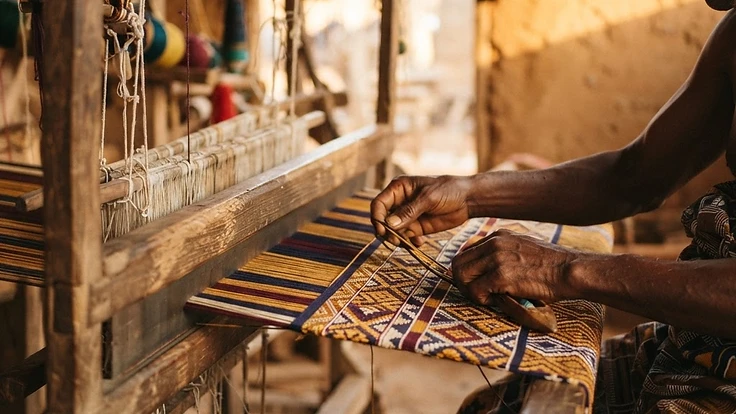
Kente is a handwoven textile tradition of the Akan people of Ghana, historically associated with the Asante and Ewe kingdoms. Each pattern carries a name, a proverb and a meaning, so that a cloth can communicate status, memory and aspiration. Woven in narrow strips and joined together, Kente is both a technical craft and a symbolic language. Today it is recognised internationally as a symbol of Ghanaian and broader African cultural identity, worn at ceremonies and reinterpreted by contemporary designers. Its continuity depends on transmitting knowledge of patterns, weaving technique and meaning to new generations while enabling artisans to earn a living from the tradition.
Explanation
Kente weaving is a highly codified craft. Strips are woven on a narrow loom by men who learn the work through apprenticeship, and the assembled cloth is worn at weddings, festivals and state occasions. Patterns such as Adinkra symbols and named motifs carry proverbs and historical references.
Origin & History
Kente originated among the Asante and Ewe peoples of what is now Ghana, with roots in traditions of weaving and royal patronage dating back several centuries.
Why It Matters
Kente shows how a textile can carry historical memory, social meaning and identity across generations, and how heritage can support a contemporary creative economy.
Living Practice Today
Kente is woven and worn across Ghana and the diaspora, taught in workshops and schools, and reinterpreted in fashion and design.
Ghana National Commission on Culture; UNESCO Intangible Cultural Heritage records.