Chinese Calligraphy
Chinese calligraphy is the art of writing Chinese characters with brush and ink. It is considered one of the highest visual arts in Chinese culture, where the form of a character and the energy of its execution are valued as much as its meaning. Calligraphy connects language, aesthetics, philosophy and personal cultivation. Mastery requires years of practice and an understanding of the historical styles passed down by masters. As a living tradition, it is taught in schools, practised by amateurs and exhibited in museums, linking everyday writing to a continuous artistic lineage stretching back millennia.
Explanation
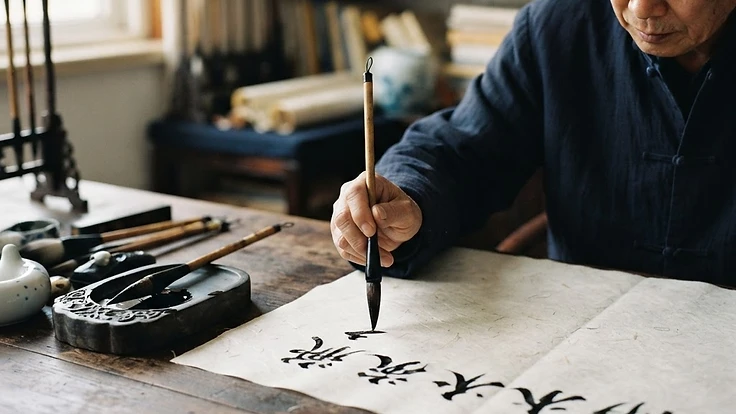
Calligraphy is practised with a soft brush, ink stone and rice paper. Styles such as seal, clerical, regular, running and cursive script each carry historical associations, and a work is judged by rhythm, structure and spirit.
Origin & History
Calligraphy evolved from early Chinese writing systems and was refined over two millennia into a major art form.
Why It Matters
Calligraphy shows how writing can become a carrier of aesthetic, philosophical and cultural value across thousands of years.
Living Practice Today
Calligraphy is taught in Chinese schools, practised widely and exhibited as contemporary art.
China Academy of Art; Palace Museum collections.