Andean Textile Traditions
Andean textile traditions encompass the weaving, spinning and dyeing practices of the indigenous peoples of the Andes, from Bolivia and Peru to Ecuador. Textiles carry identity, cosmology and social structure through patterns, colours and techniques passed down across generations. Weaving is both an economic activity and a system of meaning. The continuity of Andean textiles demonstrates how a craft tradition can preserve indigenous knowledge and community organisation while engaging with contemporary markets, and how material culture can carry memory as effectively as writing.
Explanation
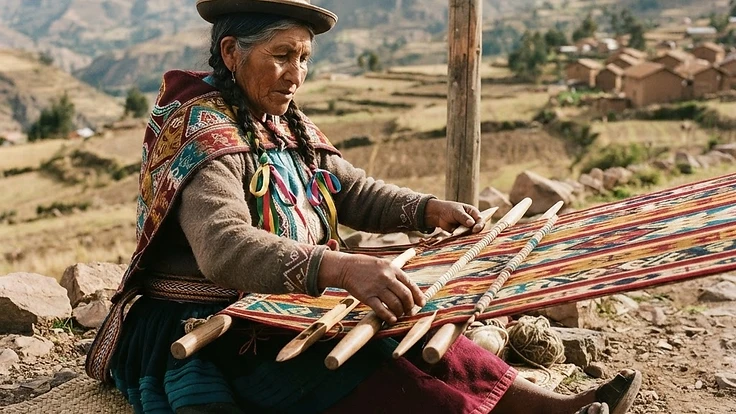
Andean weavers use backstrap and frame looms to create textiles whose patterns encode community identity, social roles and cosmological ideas.
Origin & History
Andean textile traditions date back millennia to pre-Columbian civilisations and continue in indigenous communities today.
Why It Matters
Textiles show how material culture can carry memory and identity across generations.
Living Practice Today
Andean weaving is practised in indigenous communities and supported by fair trade and cultural programmes.
UNESCO Intangible Cultural Heritage; Bolivian Ministry of Cultures.