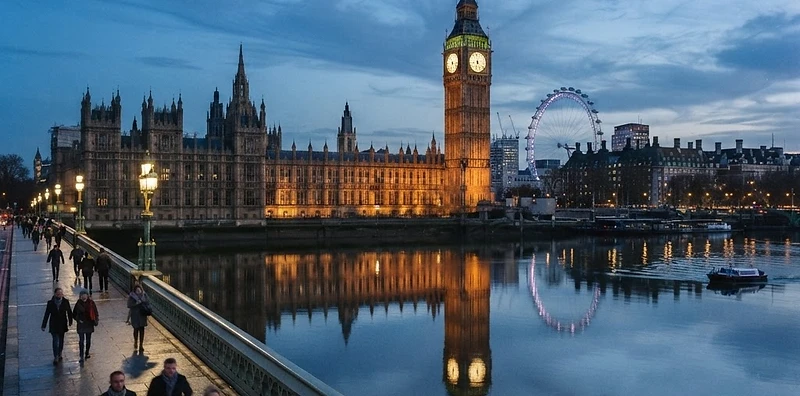
United Kingdom
A union of four nations with devolved cultural policy, distinct language regimes and a heavily urbanised, ageing population.
Local name: United Kingdom
Recognised regional or minority languages: Welsh, Scottish Gaelic, Irish, Cornish, Scots
Source labels and dataset codes are those published by the statistical authority named on each row. Figures are reproduced as retrieved, without interpolation.
The United Kingdom (United Kingdom) is a sovereign state located in Western Europe, comprising the island of Great Britain, the northeastern portion of the island of Ireland, and many smaller islands. Its capital is London. The official language is English, while Welsh, Scottish Gaelic, Irish, Cornish, and Scots are recognised regional or minority languages under the Council of Europe Charter. The nation is defined by a parliamentary democracy and a constitutional monarchy, which provide a framework for its long-standing political continuity. Culturally, the United Kingdom is characterised by a complex interplay of four distinct national identities, which have historically shaped its social and institutional development. Demographic continuity is maintained through a combination of natural change and international migration, supported by a robust system of national statistical monitoring that tracks population trends across its constituent nations.
UNESCO Intangible Cultural Heritage: Traditions and expressions of the United Kingdom · Cultural practices of the United Kingdom


Implementation of the 2003 UNESCO Convention for the Safeguarding of the Intangible Cultural Heritage
The United Kingdom ratified the 2003 UNESCO Convention in 2024 to formalise the protection of its living heritage. The policy establishes a national framework for communities to identify and safeguard their own cultural traditions.
- Instrument
- 2003 UNESCO Convention for the Safeguarding of the Intangible Cultural Heritage
- Year
- 2024
- Scope
- United Kingdom national policy