Slovenia
A small Alpine-Adriatic state with constitutionally protected Italian and Hungarian minorities and strong amateur choral culture.
Local name: Slovenija
Recognised regional or minority languages: Italian, Hungarian, Romani
Source labels and dataset codes are those published by the statistical authority named on each row. Figures are reproduced as retrieved, without interpolation.
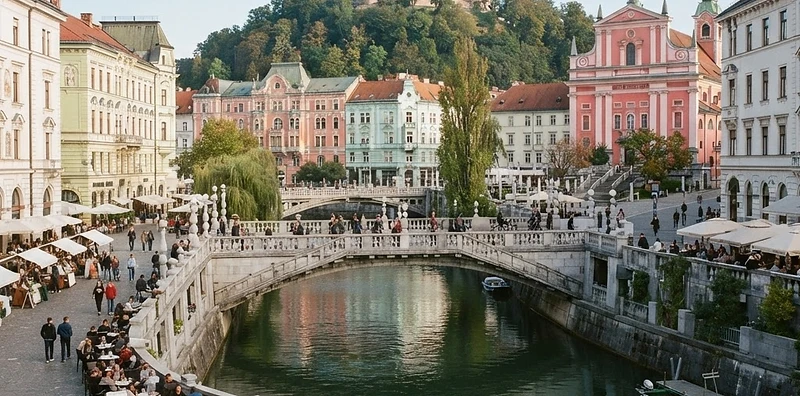
Slovenia, known locally as Slovenija, is a Central European nation situated at the intersection of the Alps, the Mediterranean, the Pannonian Plain, and the Dinaric Alps. The country maintains a strong cultural and demographic continuity rooted in its distinct linguistic heritage, with Slovene serving as the official language. Under the Council of Europe Charter, Italian, Hungarian, and Romani are recognized as regional or minority languages. Centered on its capital, Ljubljana, the nation is defined by its high forest coverage, a commitment to sustainable development, and a parliamentary democratic system established in 1991. Slovenia's demographic profile is characterized by a stable but aging population, supported by a high standard of living and integration into the European Union. Its cultural identity is preserved through a blend of traditional practices, such as beekeeping and lacemaking, and a modern, innovation-driven economy that balances global integration with the protection of its unique natural and historical landscape.
UNESCO Intangible Cultural Heritage: Škofja Loka passion play · Door-to-door rounds of Kurenti · Bobbin lacemaking in Slovenia · Beekeeping in Slovenia, a way of life · Midwifery: knowledge, skills and practices · Art of dry stone construction, knowledge and techniques

Strategy for the Development of Culture 2024-2031
This strategy outlines the government's commitment to the sustainable development of the cultural sector, focusing on the preservation of heritage and the support of creative industries. It emphasizes the importance of cultural accessibility and the integration of digital technologies in safeguarding national identity.
- Instrument
- Strategy
- Year
- 2024
- Scope
- Slovenia national policy