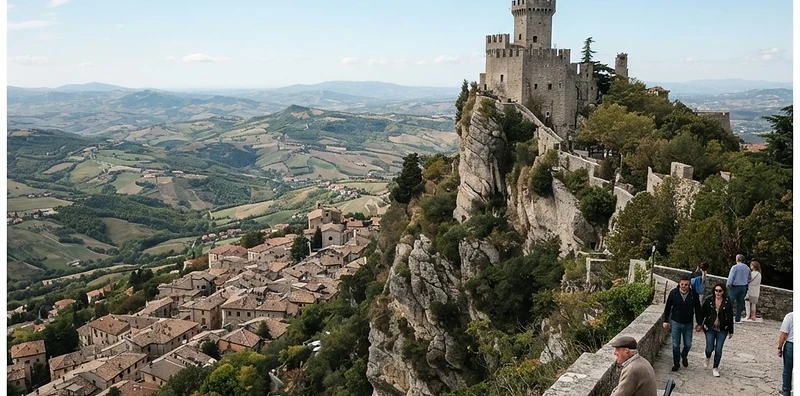
San Marino
Europe's oldest surviving republic, with a static and ageing population and heritage tied to civic ritual.
Local name: San Marino
Recognised regional or minority languages: Romagnol
Source labels and dataset codes are those published by the statistical authority named on each row. Figures are reproduced as retrieved, without interpolation.
The Republic of San Marino, known locally as San Marino, is an enclaved microstate situated within the Italian peninsula. The official language is Italian, and the Romagnol language is recognised as a regional or minority language under the Council of Europe Charter. The capital city is San Marino. The country is defined by its status as one of the oldest sovereign states in the world, having maintained its independence since the early medieval period. Its demographic and cultural continuity is anchored by its unique constitutional framework, which dates back to the 1600s, and its enduring institutional, economic, and social integration with Italy. Despite its small size of 61 square kilometres, the nation preserves a distinct identity through its parliamentary republic structure and its historical role as a sanctuary of liberty, which remains central to its national narrative and social cohesion.
UNESCO Intangible Cultural Heritage: The Feast of Saint Agatha · The Ceremony of the Investiture of the Captains Regent

Declaration on the Citizens’ Rights and Fundamental Principles of San Marino Constitutional Order
This foundational legal instrument establishes the core principles of the Sammarinese state, including the protection of civil liberties and the democratic structure of the government. It serves as the primary constitutional framework that ensures the continuity of the republic's legal and social order.
- Instrument
- Constitutional Order no. 59 of 8 July 1974
- Year
- 1974
- Scope
- San Marino national policy