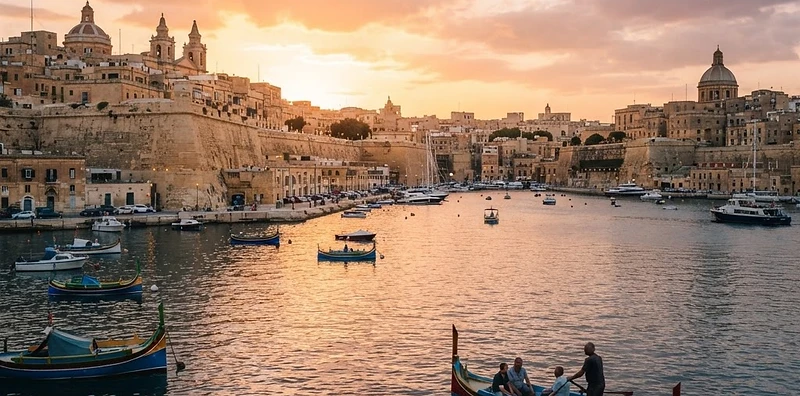
Malta
A bilingual island microstate with Europe's highest population density and rapid immigration-driven growth.
Local name: Malta
Recognised regional or minority languages: Maltese Sign Language
Source labels and dataset codes are those published by the statistical authority named on each row. Figures are reproduced as retrieved, without interpolation.
Malta (local name: Malta) is an archipelago nation located in the central Mediterranean Sea, south of Sicily. Its capital is Valletta. The country has two official languages, Maltese and English, and recognises Maltese Sign Language as a regional or minority language under the Council of Europe Charter. Malta is defined by its dense population, its strategic position as a historical maritime crossroads, and a strong cultural continuity rooted in its unique Semitic-based language and long-standing Catholic traditions. The nation maintains a distinct demographic profile characterised by high population density and significant recent growth driven by net migration. Its cultural identity is further reinforced by a commitment to preserving its extensive archaeological heritage and intangible traditions, which are managed through national agencies and integrated into its broader European and Mediterranean development strategies.
UNESCO Intangible Cultural Heritage: L-Għana, a Maltese folksong tradition · Il-Ftira, culinary art and culture of flattened sourdough bread in Malta · Maltese Village Festa, an annual community celebration

National Cultural Policy 2021
The National Cultural Policy 2021 establishes a strategic framework to integrate culture into national development and enhance the wellbeing of the population. It focuses on capacity building, infrastructure development, and the safeguarding of both tangible and intangible heritage.
- Instrument
- National Cultural Policy
- Year
- 2021
- Scope
- Malta national policy