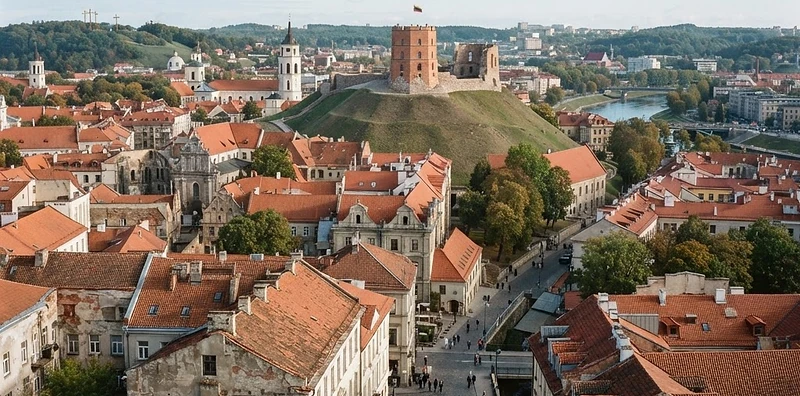
Lithuania
A Baltic state whose heritage policy centres on the UNESCO-listed song and dance celebration and regional craft revival.
Local name: Lietuva
Recognised regional or minority languages: Samogitian, Karaim, Russian-speaking minority
Source labels and dataset codes are those published by the statistical authority named on each row. Figures are reproduced as retrieved, without interpolation.
Lithuania, known locally as Lietuva, is a nation situated in the Baltic subregion of Northern Europe. Its capital and largest city is Vilnius. The official language is Lithuanian, which belongs to the Baltic branch of the Indo-European language family. Under the Council of Europe Charter for Regional or Minority Languages, Lithuania recognises the rights of its linguistic communities, including the Samogitian, Karaim, and Russian-speaking minority populations. The country is defined by its strong cultural continuity, rooted in a history of the Grand Duchy of Lithuania and a resilient national identity that persisted through periods of occupation. Demographic and cultural stability is maintained through a commitment to the preservation of traditional arts, such as multipart singing and cross-crafting, alongside a modern integration into European political and economic structures. This synthesis of ancient Baltic heritage and contemporary European statehood forms the core of the Lithuanian national experience.
UNESCO Intangible Cultural Heritage: Sutartinės, Lithuanian multipart songs · Cross-crafting and its symbolism · Baltic song and dance celebrations
Law on the Protection of Ethnic Culture
This law establishes the legal framework for the preservation and promotion of Lithuanian ethnic culture. It mandates state support for traditional crafts, folklore, and the safeguarding of intangible heritage to ensure the continuity of national identity.
- Instrument
- Law
- Year
- 1999
- Scope
- Lithuania national policy