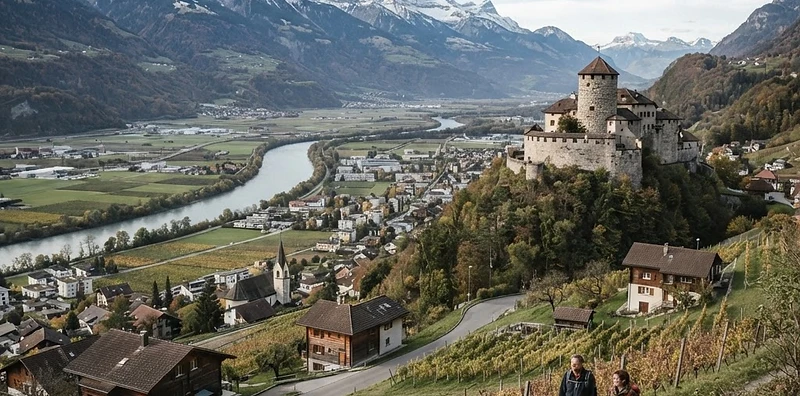
Liechtenstein
A Alpine principality where a large cross-border workforce and dialect preservation sit alongside strong civic associational life.
Local name: Liechtenstein
Recognised regional or minority languages: Alemannic dialects
Source labels and dataset codes are those published by the statistical authority named on each row. Figures are reproduced as retrieved, without interpolation.
Liechtenstein is a landlocked microstate located in the Alpine region of Central Europe, situated between Switzerland and Austria. The country is known as Liechtenstein in its own language, with German serving as the official language and Alemannic dialects recognised as regional linguistic forms. The capital is Vaduz. The nation is defined by its enduring political stability, having maintained its sovereign borders for over three centuries, and its unique constitutional monarchy that integrates direct democratic elements. Its demographic and cultural continuity is anchored by a high degree of social cohesion, a strong reliance on the Swiss franc as its legal currency, and a commitment to preserving its historical heritage through active state-led cultural policies. As a small state, Liechtenstein maintains close economic and political ties with its neighbours while fostering a distinct national identity that balances traditional customs with modern economic integration.
UNESCO Intangible Cultural Heritage: Alpine transhumance

Energy Strategy Liechtenstein
The Energy Strategy aims to ensure a sustainable and secure energy supply for the country. It focuses on increasing energy efficiency, promoting renewable energy sources, and reducing carbon emissions to meet national and international climate targets.
- Instrument
- Energy Strategy 2020-2030
- Year
- 2020
- Scope
- Liechtenstein national policy