Latvia
A Baltic republic with a shrinking population, a large Russophone minority and a strong choral and folk-costume tradition.
Local name: Latvija
Recognised regional or minority languages: Latgalian, Livonian, Russian-speaking minority
Source labels and dataset codes are those published by the statistical authority named on each row. Figures are reproduced as retrieved, without interpolation.
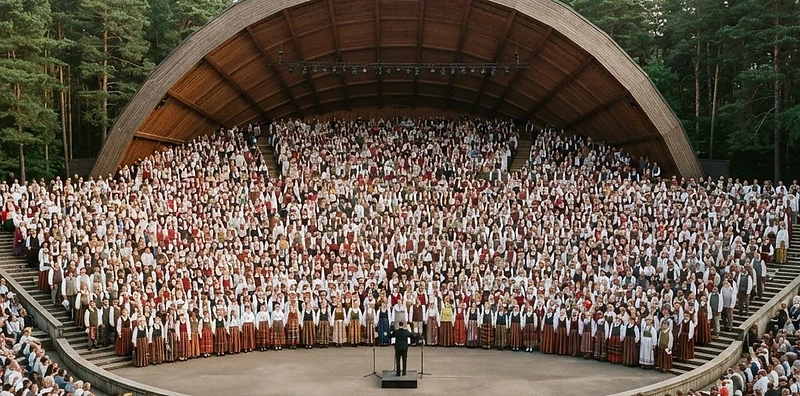
Latvia, known locally as Latvija, is a parliamentary republic situated in the Baltic subregion of Northern Europe. Its capital and largest city is Riga. The official language is Latvian, which serves as the primary vehicle for national identity and state continuity. Under the Council of Europe Charter, the country recognises Latgalian as a historical regional language, while Livonian is protected as an indigenous minority language. The Russian-speaking minority also constitutes a significant demographic component. Latvia is defined by its commitment to the principle of state continuity following the restoration of independence in 1991, a robust tradition of large-scale choral and dance festivals that anchor its cultural cohesion, and a demographic landscape currently shaped by administrative population estimation methods that reflect ongoing shifts in residency and migration patterns. These elements collectively underpin the nation's efforts to maintain its cultural and social integrity within the European framework.
UNESCO Intangible Cultural Heritage: Baltic song and dance celebrations · Suiti cultural space · Timber rafting
National Language Policy Guidelines for 2021–2027
This policy framework aims to ensure the protection, development, and usage of the Latvian language as the sole official state language. It emphasizes the integration of society through the strengthening of language proficiency across all education stages and public sectors.
- Instrument
- Strategy
- Year
- 2021
- Scope
- Latvia national policy