Kosovo
Europe's youngest population, with a large diaspora and heritage reconstruction still shaped by the 1999 conflict.
Local name: Kosova
Recognised regional or minority languages: Turkish, Bosnian, Romani, Gorani
Source labels and dataset codes are those published by the statistical authority named on each row. Figures are reproduced as retrieved, without interpolation.
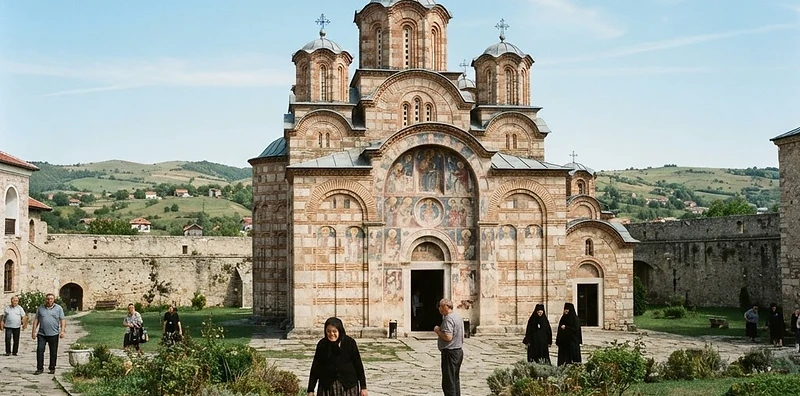
Kosovo, known locally as Kosova, is a landlocked parliamentary republic situated in the central Balkan Peninsula. Its capital is Pristina. The country maintains a complex demographic and cultural landscape, with Albanian and Serbian serving as the official languages. Under the Council of Europe Charter, Turkish, Bosnian, Romani, and Gorani are recognised as regional or minority languages, reflecting the state's multi-ethnic composition. Kosovo's continuity is defined by three structural pillars: its transition toward European integration, the recent formalisation of its demographic data through the 2024 Population and Housing Census, and the preservation of its diverse tangible and intangible cultural heritage. The latter is managed through a framework of national institutions that oversee archaeological sites, religious monuments, and spiritual traditions. Despite historical challenges regarding international recognition, the state continues to align its legislative and statistical systems with European standards to facilitate socio-economic development and regional stability.
UNESCO Intangible Cultural Heritage: Medieval Monuments in Kosovo · Singing to the accompaniment of the lahuta

Law on Art and Culture
This law establishes the general principles for cultural policies and regulates the conditions for their implementation across the country. It provides the legal framework for the establishment, financing, and administration of public institutions dedicated to art and culture.
- Instrument
- Law No. 08/L-117 on Art and Culture
- Year
- 2023
- Scope
- Kosovo national policy