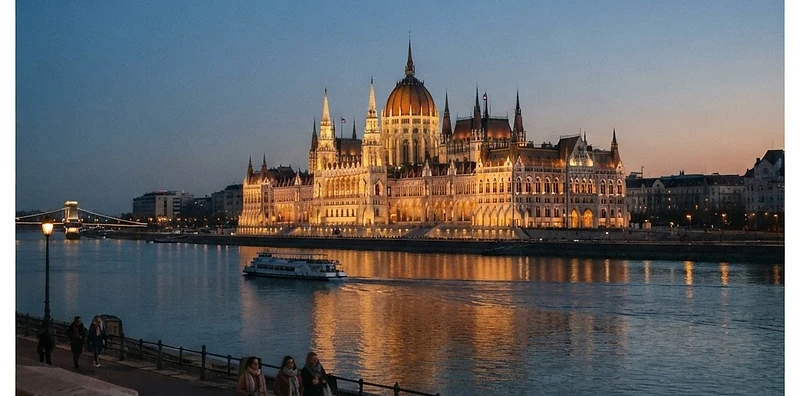
Hungary
A country with severe demographic decline and a cultural policy tightly linked to national identity and diaspora.
Local name: Magyarország
Recognised regional or minority languages: German, Romani, Croatian, Romanian, Serbian, Slovak, Slovenian
Source labels and dataset codes are those published by the statistical authority named on each row. Figures are reproduced as retrieved, without interpolation.
Hungary, known in the Hungarian language as Magyarország, is a landlocked country situated in Central Europe. Its capital and largest city is Budapest. The official language is Hungarian, which belongs to the Uralic language family, distinguishing the nation's cultural and linguistic identity within the region. Under the European Charter for Regional or Minority Languages, the country formally recognizes German, Romani, Croatian, Romanian, Serbian, Slovak, and Slovenian as minority languages. Hungary is characterized by a high degree of cultural continuity rooted in its historical role as a central European power and its distinct linguistic heritage. Demographically, the country faces structural challenges common to the region, including an aging population and a low fertility rate, which have prompted sustained policy focus on family support and demographic stability. These factors, alongside a strong tradition of preserving intangible cultural heritage, define the contemporary social landscape of the nation.
UNESCO Intangible Cultural Heritage: Busó festivities at Mohács: masked end-of-winter carnival custom · Folk music knowing in Kodály concept · Hungarian string band tradition · Lipizzan horse breeding traditions · Knowledge, craft and skills of handmade glass production · Csárdás dance tradition · Falconry, a living human heritage · Blue-dyeing craft in Europe

Family Protection Action Plan
The Family Protection Action Plan is a comprehensive demographic policy designed to reverse population decline by providing financial incentives for childbearing. It includes tax exemptions for mothers, subsidized loans for families, and support for housing and childcare infrastructure.
- Instrument
- Government Decree 45/2019 (III. 12.)
- Year
- 2019
- Scope
- Hungary national policy