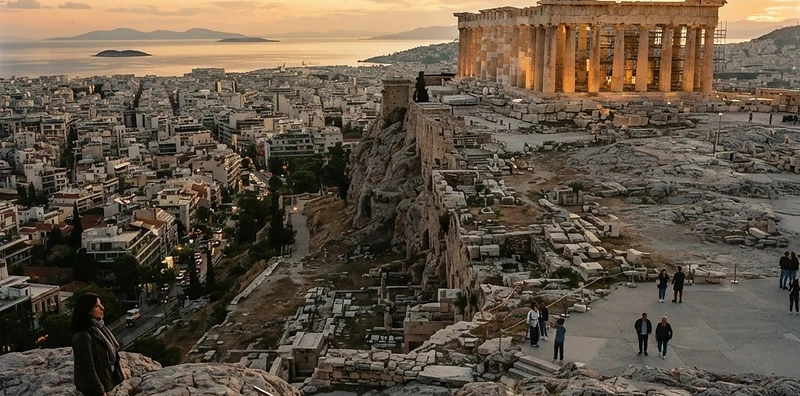
Greece
A post-crisis society with drastic ageing, island depopulation and a heritage sector inseparable from tourism.
Local name: Ελλάδα
Recognised regional or minority languages: Turkish-speaking Muslims of Thrace, Pomak, Romani, Arvanitika, Aromanian
Source labels and dataset codes are those published by the statistical authority named on each row. Figures are reproduced as retrieved, without interpolation.
Greece (Ελλάδα) is a nation located in Southeast Europe, situated at the crossroads of Europe, Asia, and Africa. The official language is Greek, while the Council of Europe Charter for Regional or Minority Languages recognises the Turkish-speaking Muslims of Thrace, Pomak, Romani, Arvanitika, and Aromanian. The capital and largest city is Athens. The country is defined by its profound demographic and cultural continuity, rooted in its status as the cradle of Western civilization and its enduring Orthodox Christian heritage. Modern Greece maintains a distinct cultural identity shaped by its Mediterranean geography, a long history of maritime activity, and a resilient social structure that balances ancient traditions with contemporary European integration. These elements, alongside a significant diaspora, ensure the continuity of Greek language and customs across generations, despite recent demographic challenges such as an aging population and low fertility rates.
UNESCO Intangible Cultural Heritage: Mediterranean diet · Know-how of cultivating mastic on the island of Chios · Tinian marble craftsmanship · Momoeria, New Year's celebration in eight villages of Kozani area, West Macedonia, Greece · Rebetiko · Byzantine chant · August 15th (Dekapentavgoustos) festivities in two Highland Communities of Northern Greece: Tranos Choros (Grand Dance) in Vlasti and Syrrako Festival · Transhumance, the seasonal droving of livestock


National Strategy for Demographic Recovery
The government has implemented a comprehensive strategy to address the declining birth rate and aging population through financial incentives and social support. This includes direct subsidies for families with children and improved access to childcare facilities to facilitate work-life balance.
- Instrument
- Law 5018/2023
- Year
- 2023
- Scope
- Greece national policy