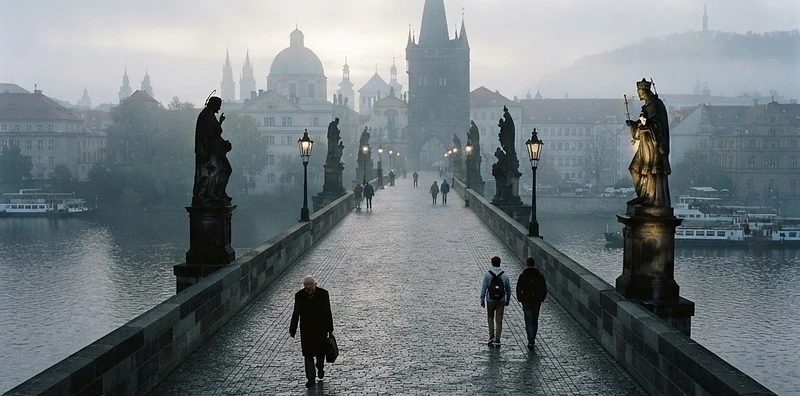
Czechia
An industrial republic with one of Europe's densest networks of small museums and a strong amateur cultural tradition.
Local name: Česko
Recognised regional or minority languages: Slovak, German, Polish, Romani
Source labels and dataset codes are those published by the statistical authority named on each row. Figures are reproduced as retrieved, without interpolation.
Czechia, known locally as Česko, is a landlocked country situated in Central Europe. The official language is Czech, while Slovak, German, Polish, and Romani are recognised as regional or minority languages under the Council of Europe Charter. Its capital is Prague, a historic centre of political and cultural life. The nation is defined by its position as a historical crossroads of European trade and intellectual exchange, a legacy of the former Kingdom of Bohemia and the subsequent formation of Czechoslovakia. Following the peaceful dissolution of the federation in 1993, the country has maintained continuity through a stable parliamentary system and a strong emphasis on the preservation of its industrial and folk heritage. Its demographic profile is characterised by a high degree of urbanisation and a long-standing tradition of secularism, which shapes its contemporary social and cultural landscape within the European Union.
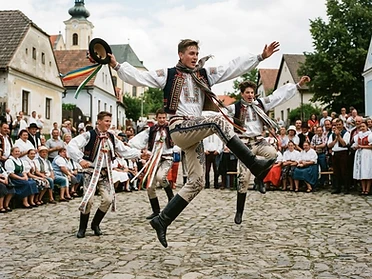
UNESCO Intangible Cultural Heritage: Slovácko Verbuňk, recruit dances · Shrovetide door-to-door processions and masks in the villages of the Hlinecko area · Ride of the Kings in the south-east of the Czech Republic · Puppetry in Slovakia and Czechia · Blaudruck/Modrotisk/Kékfestés/Modrotlač, resist block printing and indigo dyeing in Europe · Handmade production of Christmas tree decorations from blown glass beads · Falconry, a living human heritage · Knowledge, craft and skills of handmade glass production

Czechia in the Atlas


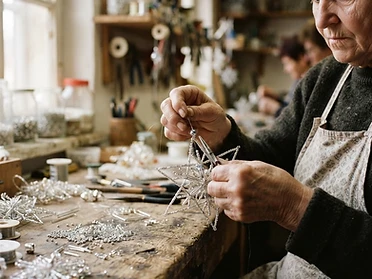
Strategy for Safeguarding Traditional Crafts: The Bearers of Folk Craft Tradition
This policy provides a framework for the identification, documentation, and support of master craftspeople who maintain traditional techniques. It ensures the continuity of intangible cultural heritage by providing financial and institutional recognition to practitioners.
- Instrument
- Government Resolution No. 102/2012
- Year
- 2012
- Scope
- Czechia national policy