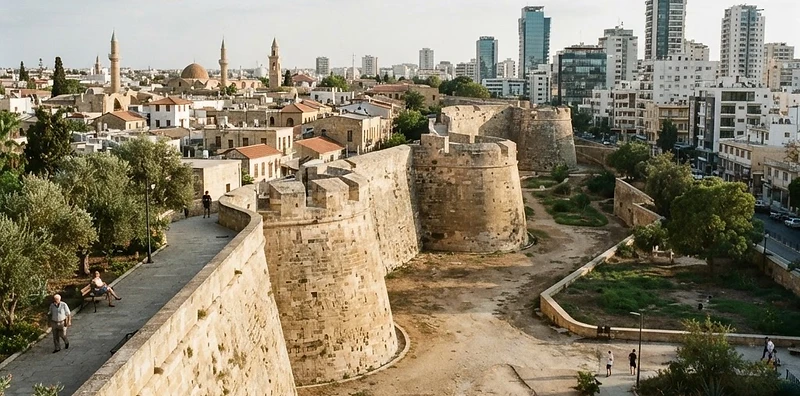
Cyprus
A divided island where two official languages and three recognised religious groups structure cultural policy.
Local name: Κύπρος / Kıbrıs
Recognised regional or minority languages: Armenian, Maronite Arabic, Cypriot Maronite Arabic
Source labels and dataset codes are those published by the statistical authority named on each row. Figures are reproduced as retrieved, without interpolation.
Cyprus (Κύπρος / Kıbrıs) is an island nation located in the Eastern Mediterranean, serving as a crossroads between Europe, Asia, and Africa. The capital is Nicosia. The official languages are Greek and Turkish, while Armenian, Maronite Arabic, and Cypriot Maronite Arabic are recognised regional or minority languages under the Council of Europe Charter. The country is defined by its status as a presidential republic and a member of the European Union since 2004, though the government exercises effective control only over the southern part of the island following the 1974 division. Its demographic and cultural continuity is shaped by a long history of Mediterranean civilisations, a resilient parliamentary democracy, and a modern economy integrated into the Eurozone. The population is characterised by a high life expectancy and a significant reliance on net migration to sustain its demographic balance amidst an ageing trend.
UNESCO Intangible Cultural Heritage: Lefkara laces or Lefkaritika · Mediterranean diet · Byzantine chant · Tsiattista poetic duelling · Art of dry stone walling, knowledge and techniques

Strategic Plan for the Promotion of Intangible Cultural Heritage
This policy aims to safeguard and promote the diverse intangible cultural heritage of Cyprus through systematic documentation and community engagement. It provides funding for local artisans and practitioners to ensure the transmission of traditional skills to younger generations.
- Instrument
- National Strategy for Culture
- Year
- 2024
- Scope
- Cyprus national policy