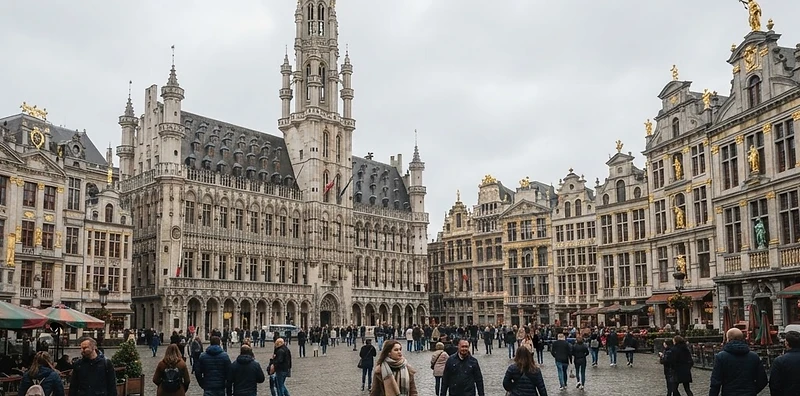
Belgium
A federal state organised around three language communities, where cultural competence is devolved and linguistic balance shapes every policy debate.
Local name: België / Belgique / Belgien
Recognised regional or minority languages: French in Flanders, Dutch in Brussels, German-speaking Community
Source labels and dataset codes are those published by the statistical authority named on each row. Figures are reproduced as retrieved, without interpolation.
Belgium, known locally as België, Belgique, and Belgien, is a federal state located in Western Europe. The country recognises three official languages: Dutch, French, and German. Under the Council of Europe Charter, it also acknowledges regional or minority languages, including French in Flanders, Dutch in the Brussels-Capital Region, and the specific status of the German-speaking Community. The capital is Brussels, which serves as a major administrative hub. Belgium is defined by its complex institutional structure, which balances the autonomy of its linguistic communities and regions with a federal framework. Its demographic and cultural continuity is anchored by a high degree of urbanisation, a long-standing tradition of social partnership, and a deeply embedded heritage of civic and communal practices that transcend its internal linguistic divisions.
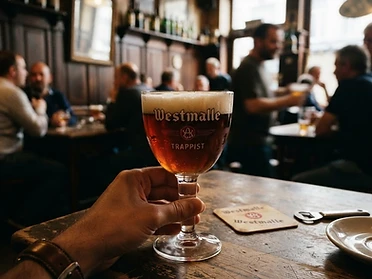
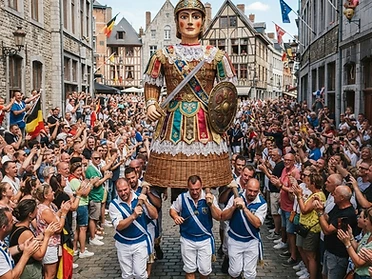
UNESCO Intangible Cultural Heritage: Beer culture in Belgium · Processional giants and dragons in Belgium and France · Ommegang of Brussels, an annual historical procession and popular festival · Safeguarding the carillon culture: preservation, transmission, exchange and awareness-raising · Art of dry stone construction, knowledge and techniques · Funfair culture · Brussels' rod marionette tradition · Safeguarding foster care heritage in the merciful city of Geel: a community-based care model

Belgium in the Atlas


Decree on Movable Cultural Properties and Intangible Heritage
This decree establishes the framework for the identification, protection, and promotion of intangible cultural heritage within the Flemish Community. It mandates the creation of advisory bodies and provides mechanisms for the recognition of living human treasures.
- Instrument
- Decree of 23 May 2003
- Year
- 2003
- Scope
- Belgium national policy