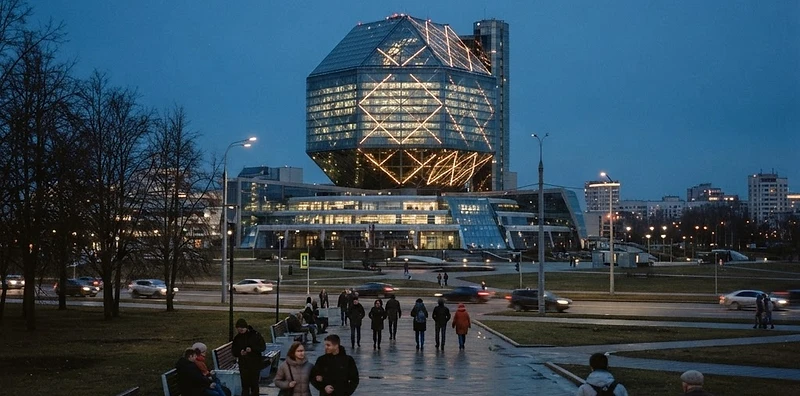
Belarus
A state where the state language is used by a minority of the population, and independent cultural institutions operate largely in exile.
Local name: Беларусь
Recognised regional or minority languages: Polish, Ukrainian, Yiddish
Source labels and dataset codes are those published by the statistical authority named on each row. Figures are reproduced as retrieved, without interpolation.
The Republic of Belarus (Беларусь) is a landlocked country in Eastern Europe, with Minsk serving as its capital. The nation recognises Belarusian and Russian as its official languages, while Polish, Ukrainian, and Yiddish are acknowledged as regional or minority languages under the Council of Europe Charter. Belarus is defined by its status as a unitary state with a strong emphasis on social and cultural continuity. Its demographic landscape is characterised by a high degree of urbanisation and a significant proportion of the population residing in the capital and regional centres. Culturally, the country maintains a distinct identity shaped by its historical position as a bridge between Eastern and Western Europe, which is reflected in its preserved traditions and state-supported heritage programmes. The nation continues to manage its demographic challenges through centralised policy frameworks, focusing on the maintenance of social stability and the preservation of its historical and cultural values.
UNESCO Intangible Cultural Heritage: Celebration of St. Yuri's Day · Rite of the Kalyady Tsars (Christmas Tsars) · Budslau fest: celebration in honor of the Budslau icon of Our Lady · Spring rite of Juraŭski Karahod · Vytsinanka, traditional art of paper cutting in Belarus · Negliubka textile tradition of Vetka District Gomel Region

State Programme on Culture of Belarus
This policy framework outlines the strategic goals for the preservation and promotion of Belarusian cultural heritage. It mandates the support of national museums, the safeguarding of intangible cultural practices, and the promotion of artistic education across all regions.
- Instrument
- Decree of the Council of Ministers of the Republic of Belarus
- Year
- 2021
- Scope
- Belarus national policy