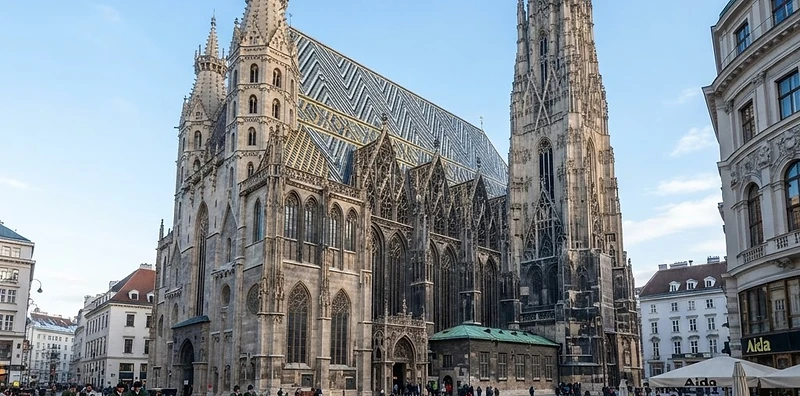
Austria
A federal republic with constitutionally protected national minorities and a heritage policy built around music, museums and imperial collections.
Local name: Österreich
Recognised regional or minority languages: Slovene, Croatian, Hungarian, Czech, Romani
Source labels and dataset codes are those published by the statistical authority named on each row. Figures are reproduced as retrieved, without interpolation.
Austria, known locally as Österreich, is a landlocked country in Central Europe with Vienna as its capital. The official language is German, while Slovene, Croatian, Hungarian, Czech, and Romani are recognised as regional or minority languages under the Council of Europe Charter. Austria is defined by its federal structure, which balances the administrative autonomy of its nine provinces with a strong central government. Its demographic and cultural continuity is anchored by a long-standing tradition of social partnership, which facilitates consensus-based economic and social policy, and a robust commitment to the preservation of its historical and intangible cultural heritage. The nation maintains a high degree of social cohesion through its extensive public service infrastructure and a focus on sustainable development, ensuring that its cultural practices remain integrated into modern societal life while adapting to contemporary demographic shifts.
UNESCO Intangible Cultural Heritage: Classical horsemanship and the High School of the Spanish Riding School Vienna · Schemenlaufen, the carnival of Imst, Austria · Falconry, a living human heritage · Blaudruck/Modrotisk/Kékfestés/Modrotlač, resist block printing and indigo dyeing in Europe · Art of dry stone construction, knowledge and techniques · Avalanche risk management · Regional Centres for Craftsmanship: a strategy for safeguarding the cultural heritage of traditional handicraft · Saint Barbara's celebrations and traditions of miners


Austrian Strategy for the Safeguarding of Intangible Cultural Heritage
This strategy outlines the national framework for implementing the 2003 UNESCO Convention. It focuses on the identification, documentation, and promotion of living traditions through the National Inventory.
- Instrument
- Federal Decree on the Implementation of the UNESCO Convention for the Safeguarding of the Intangible Cultural Heritage
- Year
- 2009
- Scope
- Austria national policy