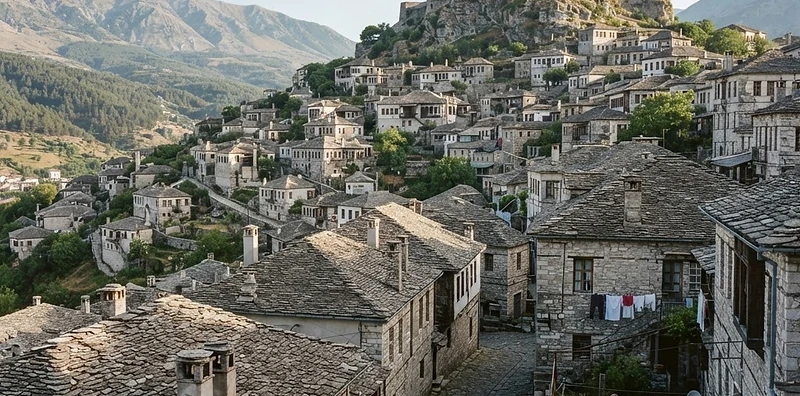
Albania
A country of large-scale emigration where family structure, sworn-virgin memory and iso-polyphony carry continuity.
Local name: Shqipëria
Recognised regional or minority languages: Greek, Aromanian, Macedonian, Romani
Source labels and dataset codes are those published by the statistical authority named on each row. Figures are reproduced as retrieved, without interpolation.
Albania, known locally as Shqipëria, is a country located in the Balkan Peninsula in Southeastern Europe. The official language is Albanian, while Greek, Aromanian, Macedonian, and Romani are recognized as regional or minority languages under the Council of Europe Charter. The capital city is Tirana. The nation is defined by its distinct linguistic continuity as a descendant of the Paleo-Balkan languages, a complex history of religious coexistence among its Muslim, Orthodox, and Catholic populations, and a resilient cultural identity shaped by its mountainous geography. These structural elements have fostered a unique social cohesion that persists despite significant demographic shifts and historical transitions. Albania maintains a strong connection to its ancestral traditions, which are actively preserved through both state-led initiatives and community-based practices, ensuring the continuity of its intangible heritage within the modern European context.
UNESCO Intangible Cultural Heritage: Albanian folk iso-polyphony · Xhubleta, skills, craftsmanship and forms of usage · Transhumance, the seasonal droving of livestock · K'cimi dancing of Tropojë · Art of playing, singing and making the lahuta

Albania in the Atlas

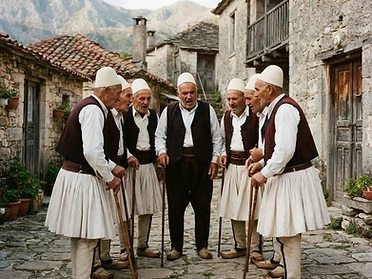

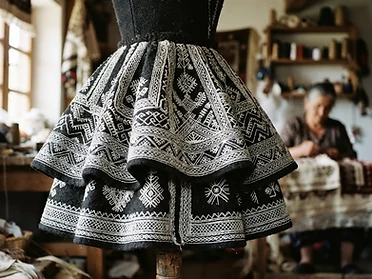
National Programme of Intangible Heritage
This policy framework aims to safeguard and promote the transmission of Albania's intangible cultural heritage to future generations. It provides funding and institutional support for community-based inventorying and the documentation of traditional practices.
- Instrument
- Law on Cultural Heritage and Museums
- Year
- 2018
- Scope
- Albania national policy